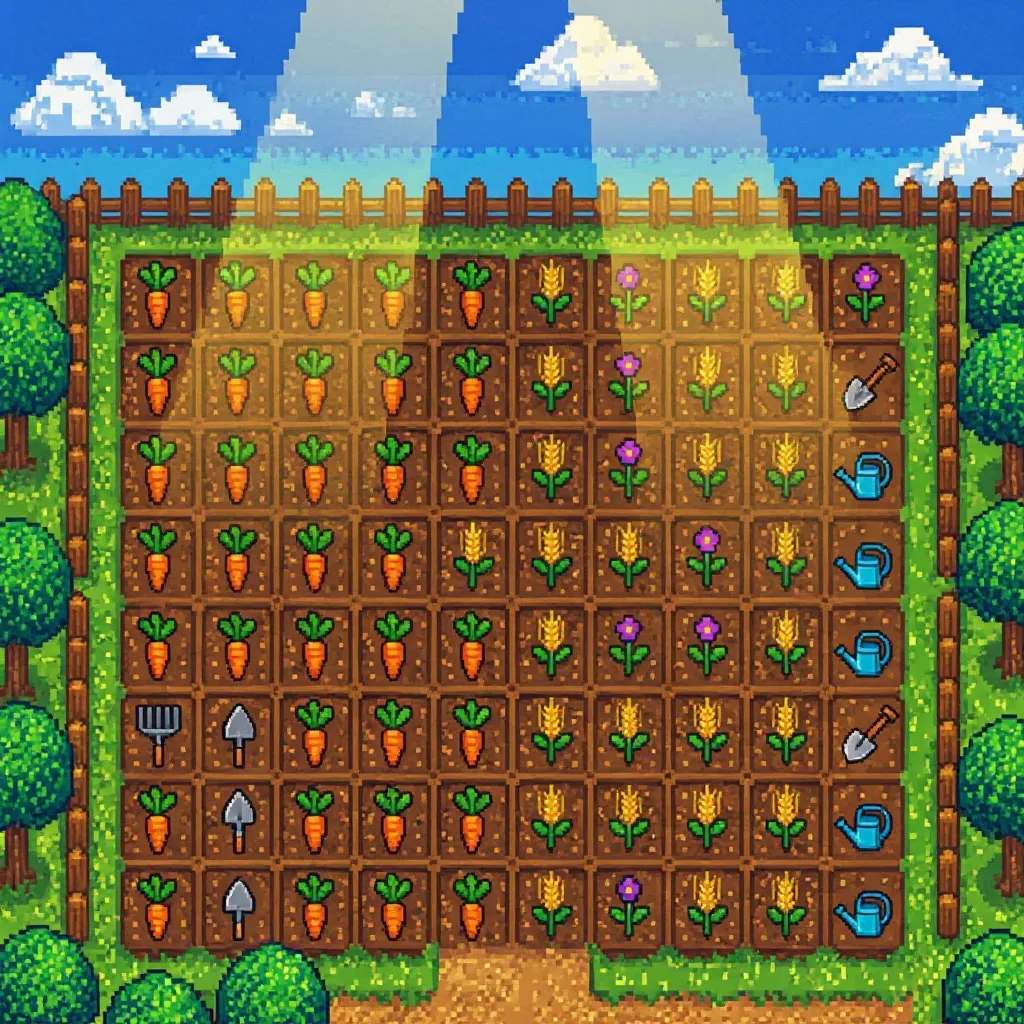

Maximize your Stardew Valley harvest with this strategic crop planning guide. Learn how to arrange fields for efficient watering, calculate seasonal profits, and choose the best crops for early-game gold and late-game automation. Perfect for beginners and min-maxers alike.
Contents
Full Description
Mastering Field Layouts
Efficient farm design in Stardew Valley is about more than just aesthetics; it’s a balance of accessibility, watering time, and crop yield. The most common mistake new farmers make is planting randomly, which leads to wasted time running between sprinklers or missing tiles during manual watering.
The Sprinkler Grid
Once you unlock Basic Sprinklers (Farming Level 2), your layout should shift from hand-watered rows to grid-based patterns. A single Basic Sprinkler covers a 3x3 area. To maximize efficiency without wasting space, place sprinklers every third tile in both directions. This ensures every soil tile is hydrated while leaving room for paths or scarecrows.
| Sprinkler Type | Coverage | Unlock Requirement |
|---|---|---|
| Basic Sprinkler | 3x3 | Farming Lv. 2 |
| Quality Sprinkler | 5x5 | Farming Lv. 9 |
| Iridium Sprinkler | 7x7 | Mining Lv. 9 |
For early-game farms, sticking to 3x3 grids allows for easy expansion. As you progress to Iridium Sprinklers, consider using "hub" layouts where one sprinkler covers a large central block, reducing the number of units needed but requiring careful pathing to avoid getting stuck.
Seasonal Profit Strategies
Not all crops are created equal. Some offer quick returns, while others require patience but pay off massively. Understanding the growth cycle versus profit margin is key to financial stability.
Spring Essentials
Spring is the foundation of your first year. Potatoes are often overlooked but provide a chance for multiple harvests per seed, making them a low-risk investment. Strawberries, available at the Egg Festival, are the gold standard for spring income due to their continuous harvest cycle. If you miss the festival, focus on Cauliflower for its high single-harvest payout.
Summer High-Yields
Summer offers the highest profit potential for raw crops. Blueberries are the king of summer farming because they produce multiple berries every four days after the initial growth period. Pair them with Hops, which grow daily once matured, providing a steady stream of ingredients for Kegs.
Fall Powerhouses
Fall is harvest season. Cranberries behave similarly to Blueberries but with a higher base price. However, the true moneymaker is Pumpkins. While they take time to grow, their size and value make them ideal for shipping bins. Don’t forget Grapes, which can be planted in late summer to carry over into fall, giving you a head start on wine production.
Tool Upgrades and Efficiency
Your tools dictate how fast you can clear land and harvest. Prioritize upgrading your Watering Can to Copper or Steel early on if you’re not using sprinklers yet. A larger watering radius means fewer trips to the pond and less energy spent.
The Hoe and Axe should follow suit, especially if you plan to expand into the forest or mine areas for wood and stone. Remember, energy management is just as important as gold. Eating food before a long day of farming ensures you don’t pass out before harvesting your most valuable crops.
Dealing with Crows and Weather
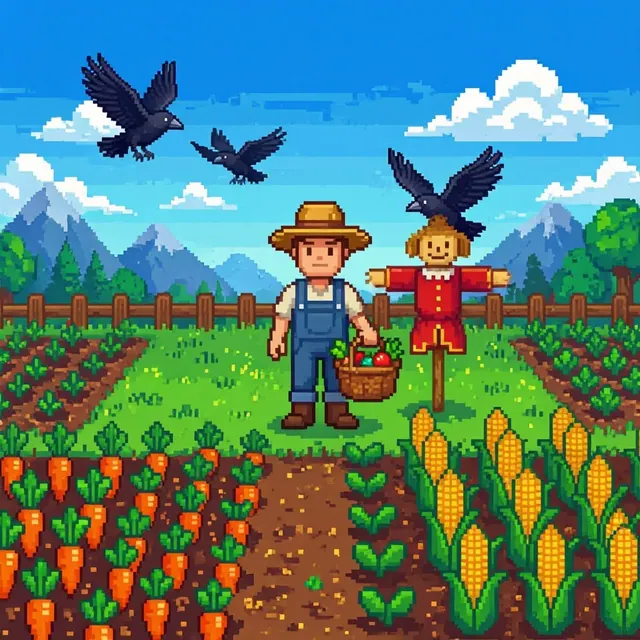
Scarecrows are non-negotiable for large fields. One scarecrow protects an 8-tile radius in all directions. For massive farms, place them strategically to overlap coverage zones without gaps. Check the weather forecast every night via the TV. Rainy days mean free watering, allowing you to focus entirely on harvesting, foraging, or mining instead of farm maintenance.
By combining smart layouts with high-value crop choices, you’ll transform your struggling plot into a profitable agricultural empire.

Comments 1
Пойти что ли в Stardew Valley поиграть...
Log in or sign up to leave a comment.