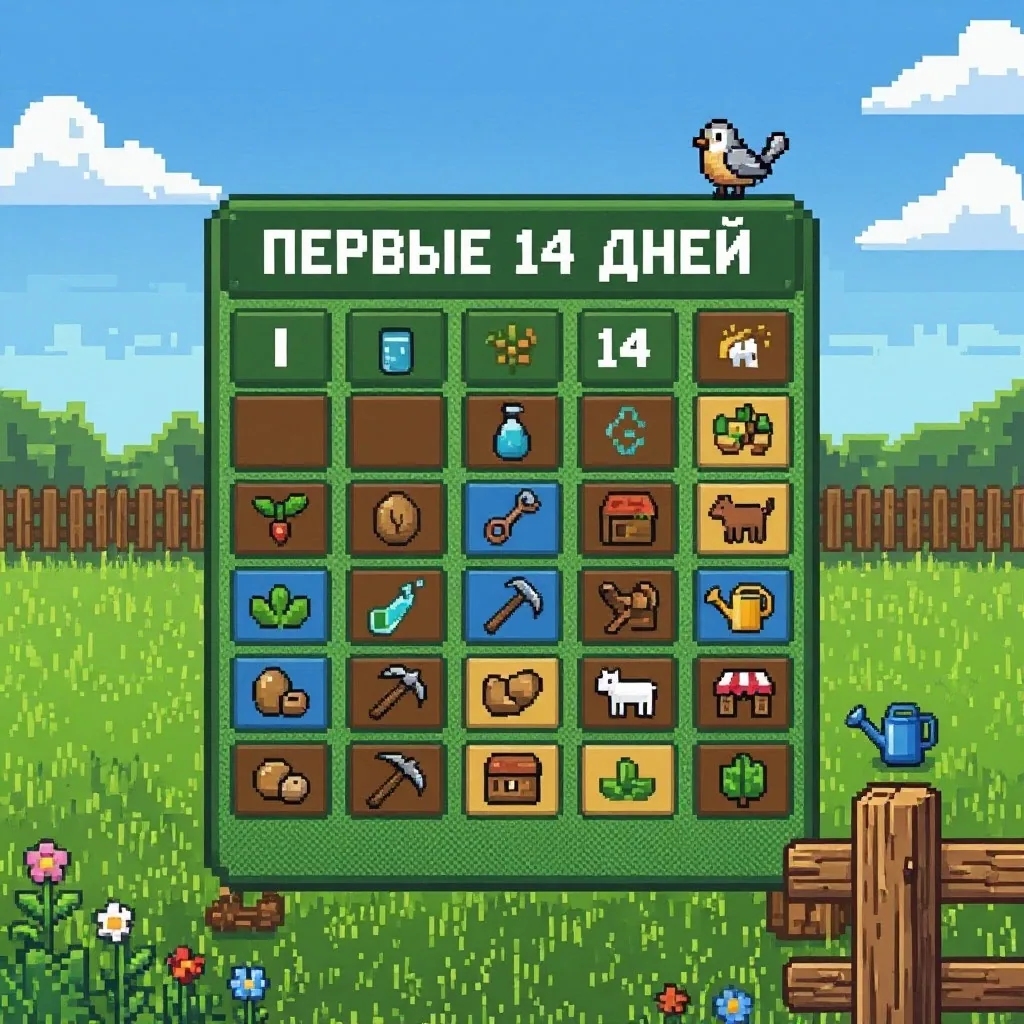

Master the first two weeks in Stardew Valley with this essential beginner guide. Learn optimal daily routines, early tool upgrades, foraging strategies, and how to prepare for the Egg Festival to build a profitable farm foundation without burning out your energy.
Contents
Full Description
Days 1–3: Establishing the Routine
The opening days set the pace for your entire playthrough. Your primary goal is not to make massive profits, but to establish sustainable habits and clear space.
- Plant Parsnips Immediately: Use the 15 parsnip seeds provided by Mayor Lewis. Plant them on day 1, water them daily, and harvest them on day 4. This yields enough gold to buy more seeds and start your economy.
- Clear Debris Strategically: Focus on clearing a 3x3 or 5x5 grid near your farmhouse first. This creates a dedicated, easily accessible area for your initial crops and future sprinklers. Save wood and stone; do not sell them.
- Forage Everything: Pick up every item you see on the ground (Dandelions, Leeks, Wild Horseradish). These are free energy sources and are required for the Spring Foraging bundle in the Community Center.
- Strict Bedtime: Go to bed before midnight. Passing out at 2:00 AM or collapsing from zero energy results in lost gold and missing items.
Days 4–10: Resource Gathering and Tool Upgrades
Once your initial crops are handled, diversify your activities to unlock new mechanics.
- Watch the TV Daily: The weather forecast dictates whether you need to water crops or can spend the day mining. The "Way of the Wind" fishing show provides crucial tips for catching difficult fish.
- Early Mining: Head to the Mines and push to floor 20. Your goal is to gather at least 20 Copper Ore and 20 Coal. This is the exact amount needed for your first tool upgrade.
- First Tool Upgrade: Visit Clint the Blacksmith. Upgrading your Watering Can to Copper is the highest priority, as it allows you to water 3 tiles in a line, saving massive amounts of energy and time. If you already have a basic sprinkler, upgrade your Pickaxe instead to break stones in fewer hits.
- Start Fishing: Buy the basic Fishing Rod from Willy at the beach. Fishing is a reliable source of food and early gold, especially on rainy days when crops water themselves.
The Egg Festival (Spring 13): A Critical Milestone
Do not miss the Egg Festival on the 13th of Spring. While winning the egg hunt is a nice bonus, the real prize is at Pierre’s stall.
Spend all your saved gold on Strawberry Seeds. Strawberries are the most profitable spring crop because they regrow every 4 days after the initial 8-day growth period. Planting them immediately after the festival (on Spring 14) guarantees at least two, sometimes three, harvests before the season ends, providing the financial backbone for your summer expansion.
Early Game Golden Rules
- Never Sell Artifacts or Minerals: Items like Chipped Amphoras, Dwarf Scrolls, or Quartz are required for the Museum bundles. Selling them early will force you to waste time hunting them down later.
- Eat Before Working: If your energy drops below 50%, eat foraged food (like a Leek or Daffodil) or a basic cooked meal before continuing to chop wood or mine.
- Prioritize the Boiler Room: When working on the Community Center, focus on the Boiler Room bundle first. It unlocks the Furnace, which is mandatory for upgrading your tools beyond copper.
| Priority Action | Reason | Target Deadline |
|---|---|---|
| Upgrade Watering Can to Copper | Reduces watering time and energy cost | Spring 10 |
| Save Gold for Strawberries | Highest ROI crop for Spring | Spring 13 (Egg Festival) |
| Reach Mine Floor 20 | Unlocks basic resource gathering for upgrades | Spring 10 |
| Donate first artifacts to Museum | Unlocks rewards and progresses bundles | Ongoing |


Comments 0
No comments yet — be the first.
Log in or sign up to leave a comment.