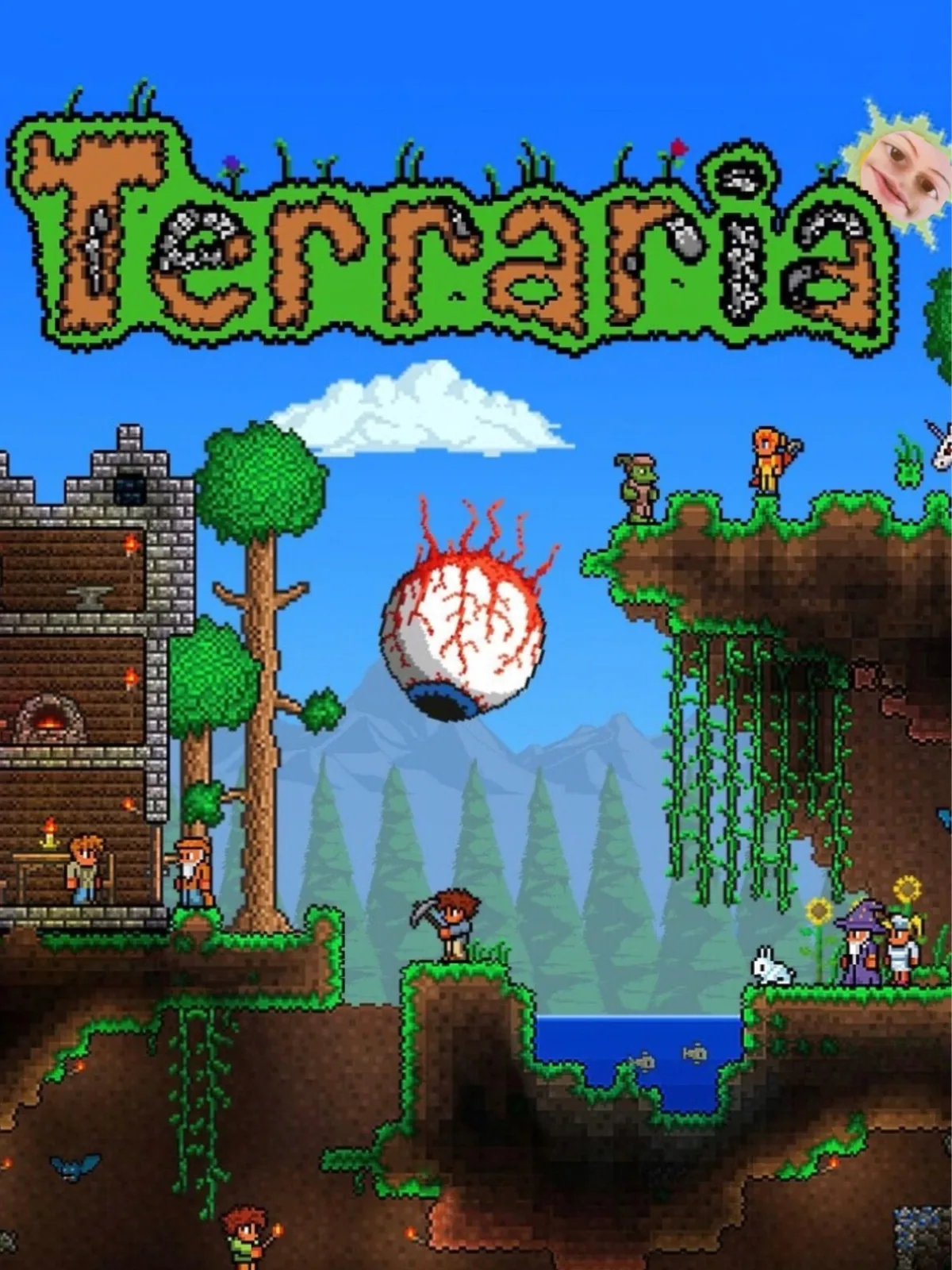

New to Terraria? This beginner guide explains how to survive your first days, build a base, gather resources, craft weapons and armor, explore underground areas, prepare for boss fights and progress into Hardmode. Learn the basics of combat, NPC housing, accessories, potions and world exploration.
Contents
- 1. Creating a Character and World
- 2. Your First Minutes in Terraria
- 3. Building Your First House
- 4. Essential Crafting Stations
- 5. Exploring the Surface
- 6. Exploring Caves and Mining Ore
- 7. Choosing a Combat Style
- 8. Accessories and Equipment
- 9. Your First Bosses
- 10. Preparing for Boss Fights
- 11. Hardmode: The Next Stage
- 12. Useful NPCs
- 13. Fishing and Potions
- 14. Common Beginner Mistakes
- 15. Recommended Progression Order
- 16. A Simple Daily Routine
- Essential Tips for Beginners
Terraria Beginner Guide: How to Start, Survive and Progress
Terraria is an adventure sandbox where you explore a randomly generated world, gather resources, build houses, craft equipment and fight dangerous enemies. There is no single way to play: you can focus on exploration, construction, collecting rare items or defeating bosses.
However, the game has a general progression system. As you discover new areas and defeat important enemies, more powerful equipment and challenging encounters become available.
This guide covers the basics of Terraria and explains how to move from your first day in the world to the later stages of the game.
1. Creating a Character and World
Before starting, you need to create a character and choose a world.
Character difficulty
- Journey - offers additional difficulty settings and research mechanics. It is suitable for players who want a more relaxed experience.
- Classic - the standard choice and a good option for a first playthrough.
- Expert - enemies and bosses are more challenging, with additional rewards.
- Master - an even harder mode intended for experienced players.
For your first playthrough, Classic is a good starting point.
World size
- Small - easier and faster to explore, but has less space and fewer resources overall.
- Medium - a balanced option for most players.
- Large - offers more room for exploration, although travelling takes longer.
A Medium world is a convenient choice for beginners.
You will also encounter one of two evil biomes:
- Corruption
- Crimson
Each has its own enemies, materials and boss. Their progression paths are similar, but some items and encounters differ.
2. Your First Minutes in Terraria
When you enter the world, you will find the Guide NPC nearby. He provides basic advice and can show crafting recipes for items you give him.
Start by collecting essential resources:
- Chop down trees with your axe.
- Collect wood.
- Craft a Work Bench.
- Make a basic weapon.
- Defeat Slimes and collect Gel.
- Craft Torches using Gel and Wood.
- Build a small shelter before nightfall.
Do not travel too far during your first day. Night brings more dangerous enemies, so having a safe base makes the early game much easier.
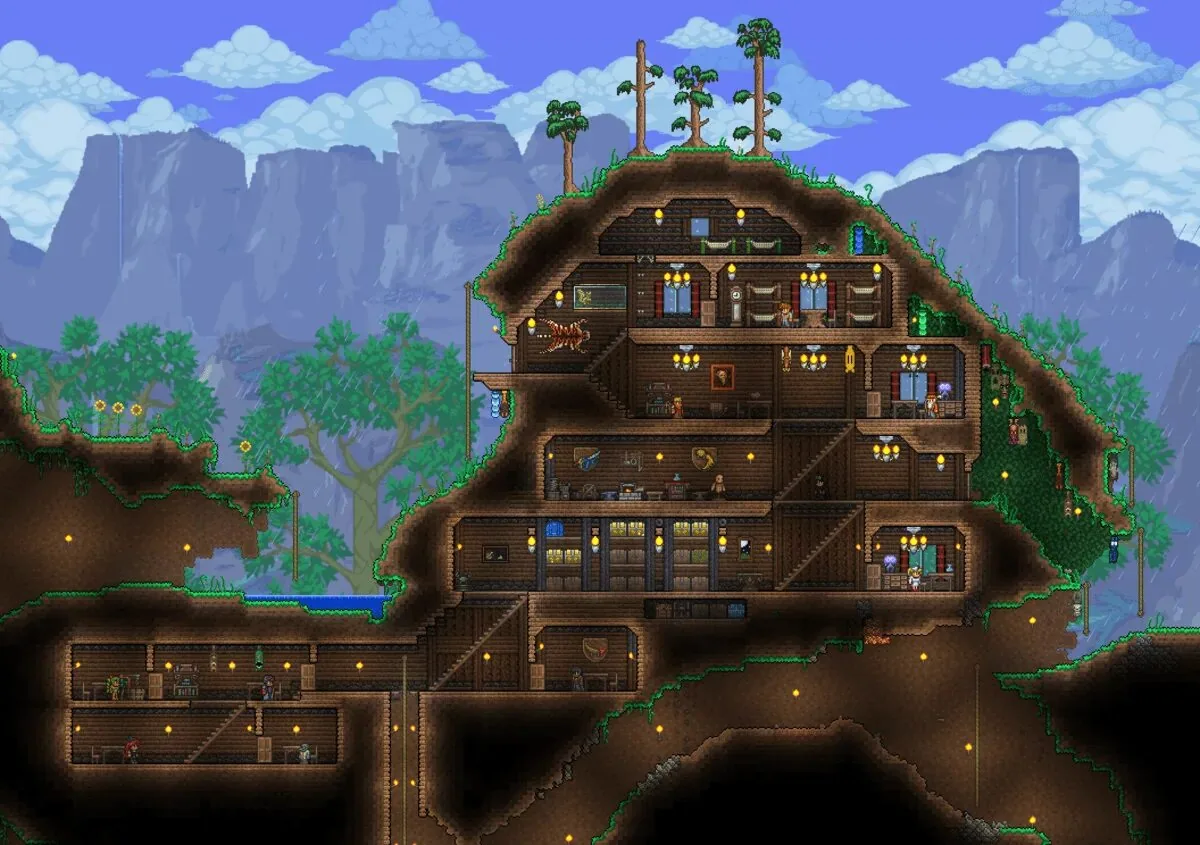
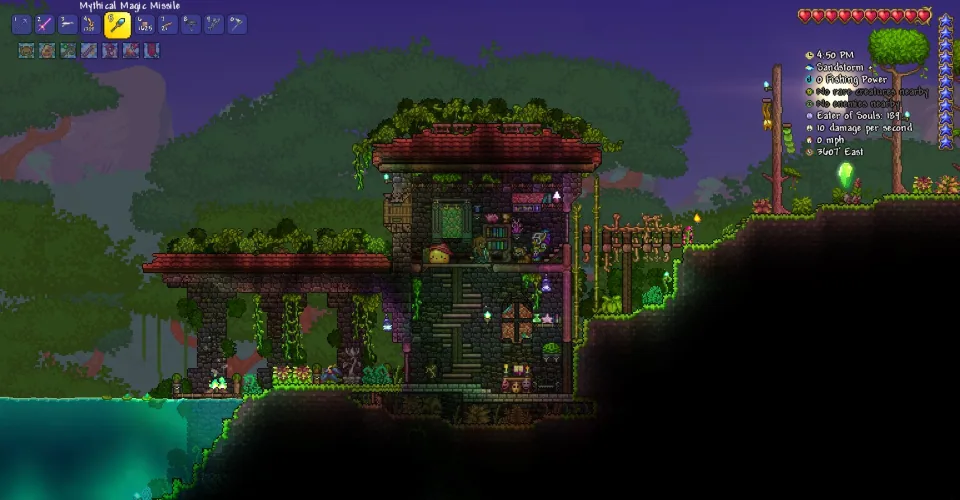
3. Building Your First House
A house is one of the most important parts of Terraria. It provides shelter and gives NPCs a place to live.
A suitable room generally needs:
- Blocks forming an enclosed space.
- Background walls.
- A door or another valid entrance.
- A light source, such as a Torch.
- A comfort item, such as a Chair.
- A flat-surface item, such as a Table or Work Bench.
The room must meet the game's housing requirements. You can check whether it is suitable through the housing menu.
Build several rooms early. More NPCs will become available as you explore and meet their arrival conditions.
Tip: You do not need a large castle at the beginning. A few simple rooms close to each other are enough.
4. Essential Crafting Stations
Crafting is a major part of Terraria's progression. Different stations unlock different recipes.
- Work Bench - used for many basic crafting recipes.
- Furnace - smelts ore into bars.
- Anvil - used to craft weapons, armor and tools from bars.
- Loom - used for cloth and certain crafting recipes.
- Alchemy Station - helps craft potions.
- Sawmill - unlocks additional furniture and building recipes.
Start with a Work Bench, Furnace and Anvil. Other stations can be added as you collect more materials.
5. Exploring the Surface
Once you have a weapon and shelter, begin exploring the surface.
Look for:
- Chests.
- Pots.
- Cave entrances.
- Unusual trees and plants.
- Small structures.
- Openings leading underground.
Chests can contain weapons, accessories, coins, potions and useful tools.
Pay particular attention to accessories that improve movement. Items that provide extra jumps, faster running or a grappling ability make exploration and combat much easier.
6. Exploring Caves and Mining Ore
Underground areas contain many of the resources needed to improve your equipment.
During the early game, look for:
- Copper or Tin.
- Iron or Lead.
- Silver or Tungsten.
- Gold or Platinum.
The available ore types depend on the world.
Take collected ore to a Furnace and turn it into bars. You can then use those bars to craft better weapons, armor and tools.
Life Crystals and Fallen Stars
Look for Life Crystals underground. Using them increases your character's maximum health.
Collect Fallen Stars at night. They are used to increase maximum mana and are also required for some crafting recipes.
What to bring underground
- A Pickaxe.
- A weapon.
- Torches.
- Rope.
- Platforms.
- Healing Potions.
- Some free inventory space.
Be careful when exploring deeper caves. Strong enemies, traps and lava can quickly become dangerous.
7. Choosing a Combat Style
Terraria has four main combat classes. You do not need to commit to one immediately, but specialization becomes more important as you progress.
Melee
Melee weapons include swords, spears, yoyos and other close-range equipment.
Advantages: - Many early weapons are easy to obtain. - Some weapons deal damage across a wide area. - Melee armor often provides good defense.
The main disadvantage is that some attacks require you to get close to enemies.
Ranged
Ranged combat uses bows, guns and ammunition.
Advantages: - You can attack from a distance. - Ranged weapons are useful against many bosses. - There is a wide selection of weapons and ammunition.
Keep an eye on your supply of arrows, bullets and other ammunition.
Mage
Mages use magical weapons that consume mana.
Advantages: - A wide variety of attack types. - Some weapons can hit several enemies at once. - Many attacks work from a distance.
The main limitation is mana consumption.
Summoner
Summoners use summon weapons, minions and whips.
Advantages: - Minions attack enemies automatically. - You can focus more on movement and dodging. - This class offers a different approach to combat.
Finding suitable equipment can be more difficult during the early game.
Tip: Try different weapons before choosing a preferred class. The best starting style is the one you find comfortable to use.
8. Accessories and Equipment
Weapons and armor are not the only things that make your character stronger.
Accessories can provide useful abilities, including:
- Double jumps.
- Faster movement.
- Fall protection.
- Improved underwater exploration.
- Increased damage.
- Additional defense.
- Better mobility and dodging.
Movement accessories are especially valuable during the early game.
Later, you may find the Goblin Tinkerer. He can reforge equipment and combine certain accessories using the Tinkerer’s Workshop.
Do not sell rare accessories before checking whether they are useful for future upgrades.
9. Your First Bosses
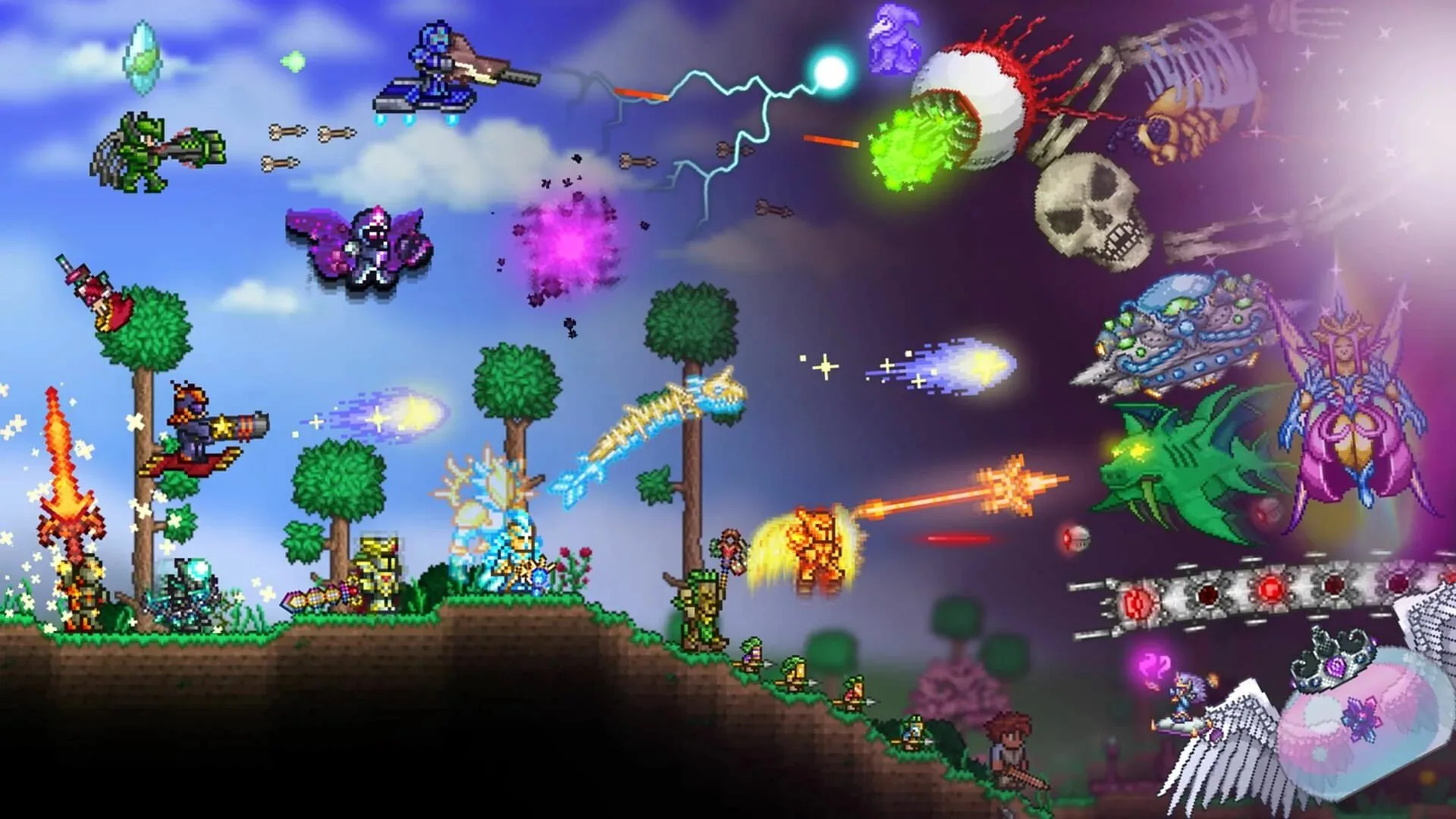
Bosses are an important part of Terraria's progression. Defeating them can unlock new materials, items and areas.
Do not rush into a boss fight without preparation. Improve your weapons and armor, collect healing supplies and build an arena.
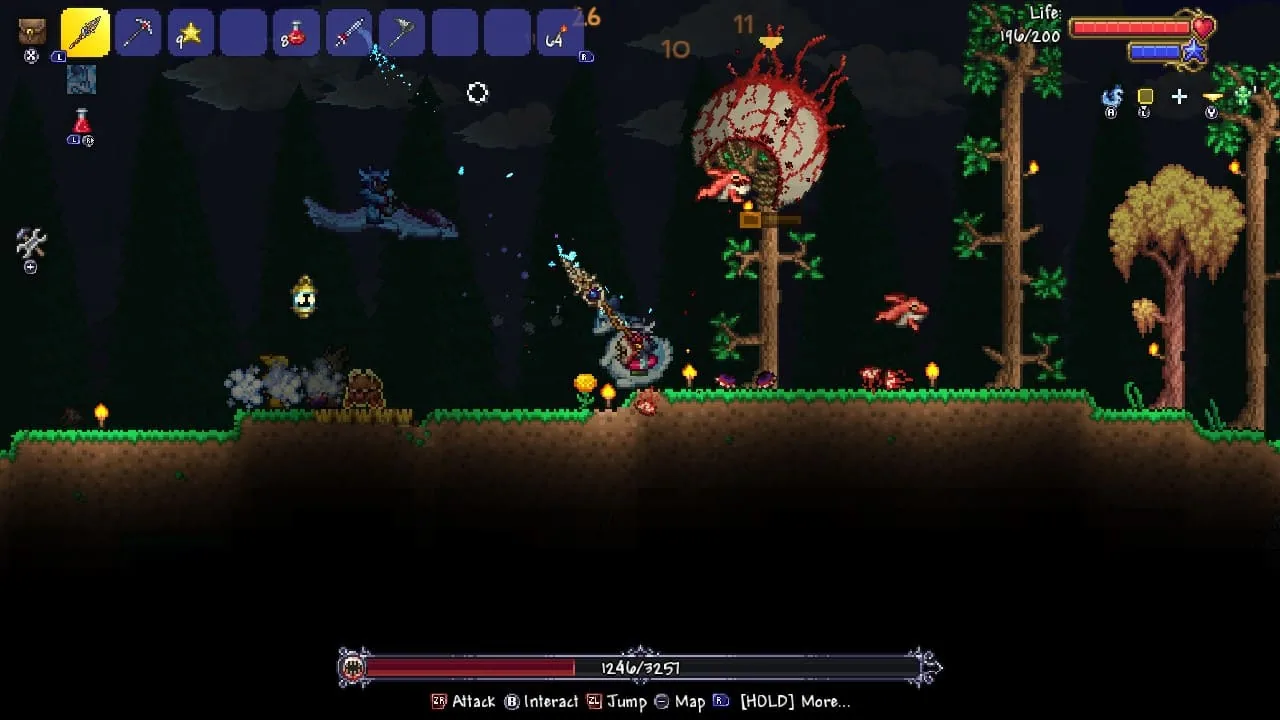
Eye of Cthulhu
One of the first bosses a new player may encounter.
Before the fight: - Build an arena using wooden platforms. - Upgrade your weapon. - Craft suitable armor. - Bring Healing Potions. - Leave enough space to dodge attacks.
Eater of Worlds
This boss appears in worlds containing the Corruption.
It consists of multiple segments, so weapons that can hit several parts of its body may be especially effective.
Brain of Cthulhu
This boss appears in worlds containing the Crimson.
Prepare an open arena and use a weapon that can hit fast-moving targets.
Queen Bee
An optional boss found in the Underground Jungle.
Defeating her provides useful rewards and can help with further progression.
Skeletron
Skeletron guards the entrance to the Dungeon.
After defeating him, you can safely explore the Dungeon and search for valuable items.
Wall of Flesh
One of the most important bosses in the early game.
Defeating the Wall of Flesh activates Hardmode, introducing stronger enemies, new ores, weapons and bosses.
10. Preparing for Boss Fights
Before a difficult battle, build an arena that gives you enough room to move.
Useful preparations include:
- Wooden platforms.
- Campfires.
- Other available sources of helpful buffs.
- Healing Potions.
- Defense and damage potions.
- Enough ammunition or mana supplies.
Avoid making the arena too small. You need room to dodge attacks and reposition yourself.
Check your accessories before the fight. Improved mobility can be more valuable than a small increase in damage.
11. Hardmode: The Next Stage
Hardmode begins after defeating the Wall of Flesh.
The world changes significantly. New enemies, ores, events, bosses and materials become available.
Your old equipment will gradually become less effective, so you need to explore again and improve your gear.
Your main objectives are:
- Find new resources and upgrade your tools.
- Craft stronger weapons and armor.
- Prepare for the Mechanical Bosses.
- Defeat all three Mechanical Bosses.
- Find and defeat Plantera.
- Explore the Jungle Temple and defeat Golem.
- Continue towards the final events of the game.
Do not rush. Hardmode is much more dangerous than the early game, so upgrade your equipment before attempting its major challenges.
12. Useful NPCs
Different NPCs can move into your world as you meet their arrival conditions.
Some of the useful characters include:
- Guide - provides crafting information.
- Merchant - sells basic supplies.
- Nurse - heals your character for coins.
- Demolitionist - sells explosives.
- Arms Dealer - sells firearms and ammunition.
- Witch Doctor - sells items related to summoning.
- Goblin Tinkerer - reforges equipment and combines accessories.
- Mechanic - sells mechanisms and wires.
- Angler - gives fishing quests.
Many NPCs require suitable housing, specific items or other conditions before they can move in.
Build extra rooms so that new characters have somewhere to live.
13. Fishing and Potions
Fishing is another useful activity in Terraria. It provides fish, crates and other items that can help with progression.
You need: - A Fishing Pole. - Bait. - A suitable body of water.
Some fishing rewards are useful for crafting potions, while others are connected to the Angler's quests.
Why potions matter
Potions provide temporary effects that can help during exploration and combat.
Useful examples include:
- Healing Potions.
- Ironskin Potions.
- Damage-boosting potions.
- Swiftness Potions.
- Spelunker Potions.
- Night Owl Potions.
- Water Walking or water-related potions.
Before fighting a difficult boss, check which buffs you can craft with the materials available at your current stage.
14. Common Beginner Mistakes
1. Ignoring housing.
Without a safe base, storing items, recovering and attracting NPCs becomes more difficult.
2. Selling every item you find.
Some rare materials and accessories are needed for crafting or later upgrades.
3. Not keeping supplies.
Always store extra Torches, building blocks, potions and crafting materials.
4. Fighting bosses too early.
If a boss is too difficult, return to exploration and improve your equipment.
5. Ignoring accessories.
Mobility is extremely important in Terraria. Do not leave useful accessories unused in your storage.
6. Keeping everything in one chest.
Organize storage by categories: weapons, armor, ores, blocks, potions, accessories and rare materials.
7. Rushing into Hardmode.
The world becomes more dangerous after the Wall of Flesh. Prepare before taking on its new challenges.
15. Recommended Progression Order
The following route is a useful general guide for a first playthrough:
- Build a house and craft your first tools.
- Find chests and useful accessories.
- Collect ore and Life Crystals.
- Craft stronger weapons and armor.
- Defeat the Eye of Cthulhu.
- Defeat the evil biome boss: Eater of Worlds or Brain of Cthulhu.
- Explore the Underground Jungle and optionally defeat Queen Bee.
- Defeat Skeletron.
- Explore the Dungeon and Underworld.
- Prepare for and defeat the Wall of Flesh.
- Gather new resources and upgrade your equipment in Hardmode.
- Defeat the three Mechanical Bosses.
- Find and defeat Plantera and Golem.
- Progress through the final events and defeat the Moon Lord.
This is a general route, not a strict set of rules. Terraria allows you to explore optional areas, fight additional bosses and build your base alongside the main progression.
16. A Simple Daily Routine
A basic routine can help you make steady progress:
- Check your storage and prepare supplies in the morning.
- Choose a goal: exploration, mining, finding accessories or building.
- Travel to the selected area.
- Collect useful resources and items.
- Avoid unnecessary risks when carrying valuable loot.
- Return to your base, organize your inventory and craft upgrades.
- Prepare for the next expedition or boss fight.
Essential Tips for Beginners
- Do not discard rare items until you know what they are used for.
- Upgrade your weapons and armor before difficult battles.
- Look for movement accessories.
- Build extra rooms for NPCs.
- Collect Life Crystals and Fallen Stars.
- Keep materials organized in separate chests.
- Use potions before major boss fights.
- Explore different biomes and underground areas.
- If a boss is too difficult, improve your equipment and try a different strategy.
Terraria is designed to be explored gradually. You do not need to complete everything in one session. Explore the world, collect resources, craft better equipment and discover new areas at your own pace. That sense of discovery is one of the most enjoyable parts of the game.
Screenshots 4
Comments 2
Полезный гайд спасибо
ОЙ, КАКАЯ ЖЕ НОСТАЛЬГИЯ :)
Log in or sign up to leave a comment.